
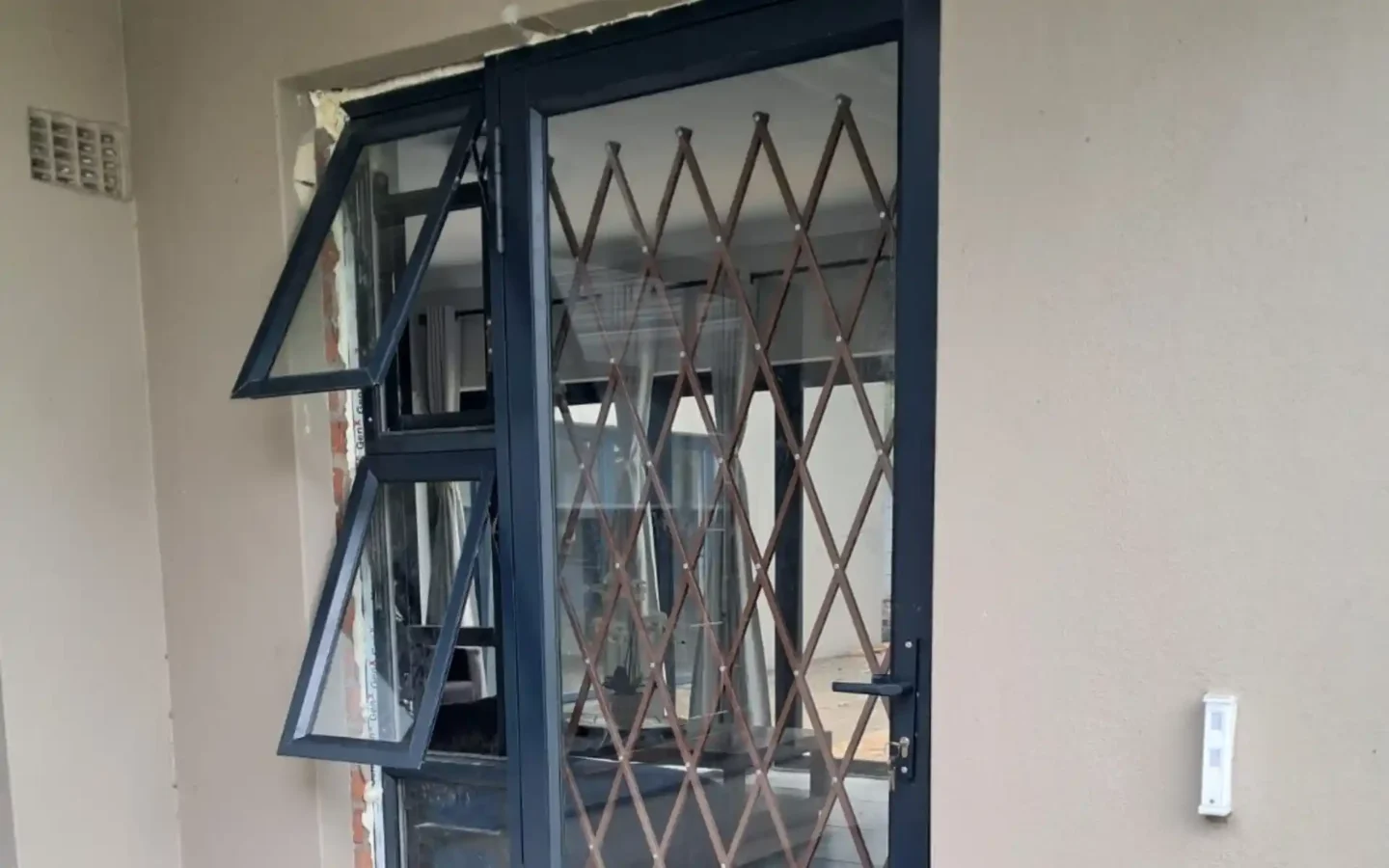
Most aluminium windows in South African homes open in one of three ways: side hung, top hung or horizontal sliding. Plenty of houses use all three, chosen room by room. Here is how they differ and where each one earns its place.
Side hung windows
A side hung window, also called a casement, has a sash hinged on one side that swings outward. The whole sash moves clear of the frame, so it gives the most ventilation of the three. It suits bedrooms and living areas that need a good through-draught in summer.
The catch is that the open sash sticks out from the wall. Next to a path or in a narrow passage it gets in the way, and when the wind picks up it should be closed or held firmly on its stay.
Top hung windows
A top hung window is hinged along the top and opens outward from the bottom. The sash leans out over the gap, so light rain runs off it rather than in. That makes it the usual choice for bathrooms, toilets and kitchens, and for vents above doors and fixed glass.
It opens less than a side hung sash, so on its own it is not the best way to cool a large room.
Horizontal sliding windows
One sash slides sideways across the other inside the frame. Nothing projects, inside or out, so sliding windows suit places where an outward-opening sash would be in the way: beside paths, braai areas, patios and narrow side passages.
The trade-off is airflow. Only one sash opens, so at most about half the window is open at a time, and the bottom track needs an occasional clean.
Burglar bars and trellis gates
Side hung and top hung windows open outward, so burglar bars fitted on the inside do not interfere with the sash. With sliding windows the sash moves within the frame, so bars can go on either side. If you are adding bars or a trellis at the same time, mention it when you request a quote so the installation allows for them.
Mixing styles in one window
One window frame can combine styles: a side hung sash next to fixed glass, or a top hung vent above a side hung sash. This is common, and it puts the airflow where you want it while keeping clear, fixed glass for the view.
Room by room
- Bedrooms: side hung, often with a top hung vent above for air at night
- Bathrooms: top hung, with obscure glass for privacy
- Kitchens: top hung over the sink, or sliding over a counter
- Passages and patios: horizontal sliding
- Living rooms: side hung for air, with fixed panes for the view
These are starting points rather than rules. When we measure, we look at how each opening is used before suggesting a layout. More on each style: side hung windows, top hung windows and horizontal sliding windows.