
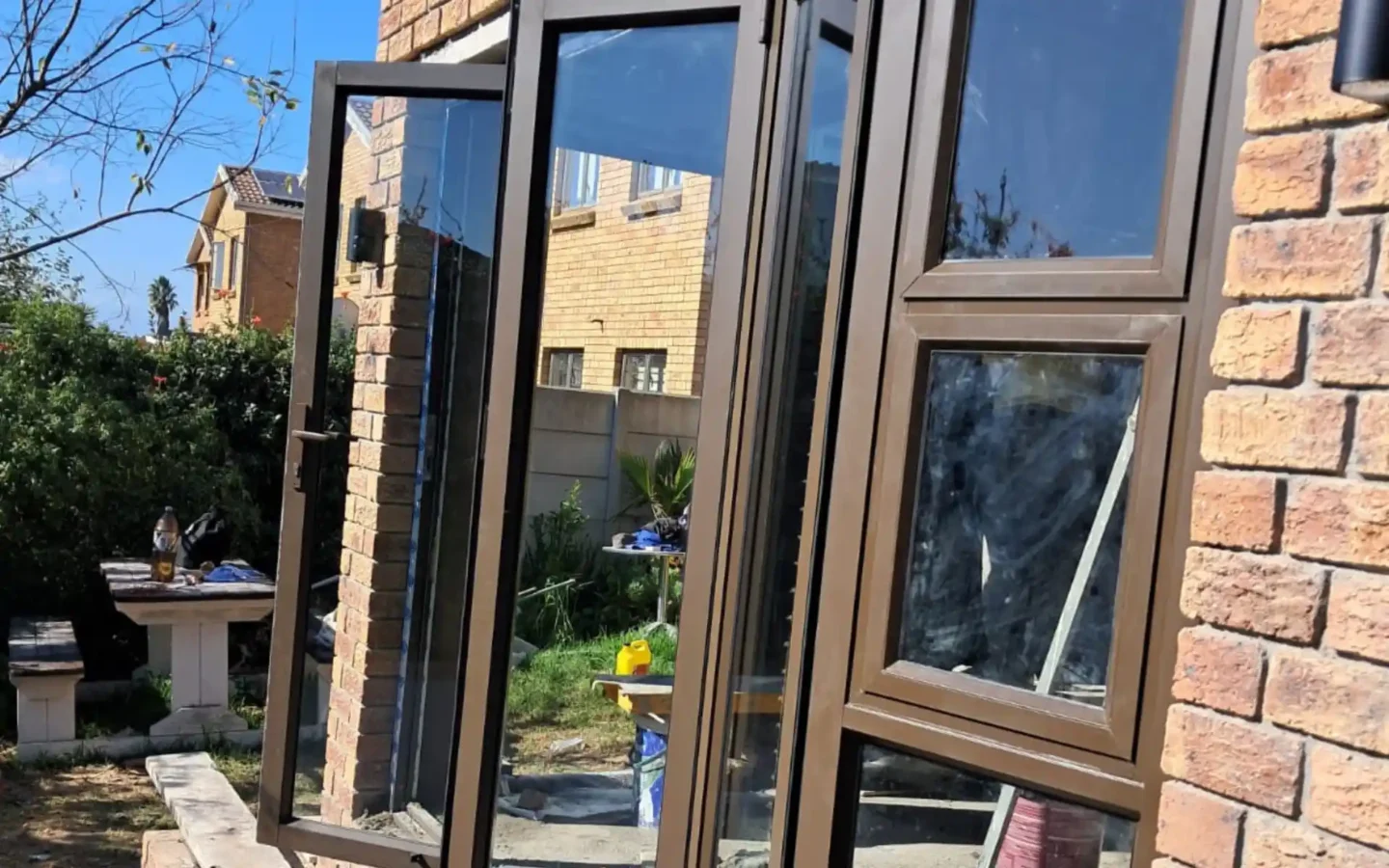
How side hung windows work
A side hung window, also called a casement, has a sash hinged on one vertical edge. It swings outward like a small door and is held where you leave it by a stay or friction hinges. Because the whole sash moves clear of the frame, the full opening is available for air.
Most side hung windows combine one or more opening sashes with fixed panes, and many have a top hung vent above as well.
Where they work well
- Bedrooms and living rooms that need a good through-draught in summer
- Windows facing a garden or open ground, where an outward-opening sash blocks nothing
- Older homes with casement windows, where the new frames keep the original look
Points to weigh up
- The open sash projects past the wall. Beside a path or in a narrow passage, a horizontal sliding window is easier to live with.
- When the southeaster picks up, keep sashes closed or firmly on their stays.
- Burglar bars fit on the inside without getting in the way of the opening sash.
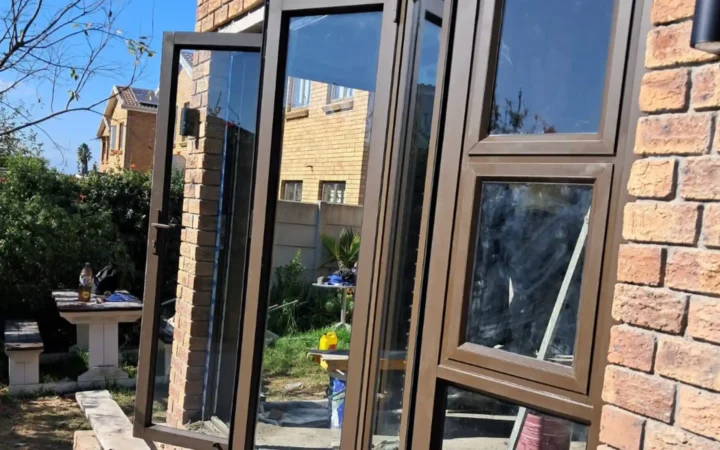
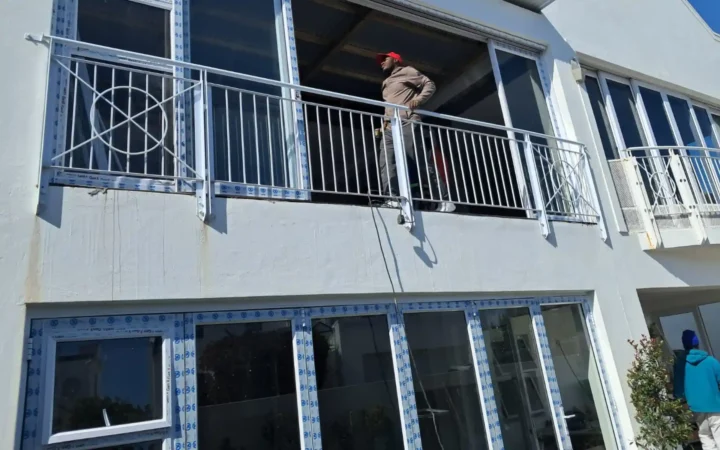
Side hung windows we have fitted
Side hung window questions
Is a side hung window the same as a casement window?
Yes. They are two names for the same thing: a sash hinged on its side that opens outward.
Can I combine side hung and top hung sashes in one window?
Yes. A common layout is a side hung sash with a top hung vent above it, or a row of fixed panes with one opening sash. The layout is decided opening by opening when we measure.
Which room should get side hung windows?
Rooms where you want the most air: bedrooms and living areas. For bathrooms, a top hung window is usually the better fit.